Key Takeaway
A professional oil service involves the replacement of engine lubricants and filters, supplemented by a multi-point technical inspection. This process maintains thermal stability, prevents chemical sludge formation in turbocharged systems, and identifies early mechanical wear. Routine intervals between 5,000 and 8,000 kilometers ensure internal combustion engines operate within designed tolerances, preventing catastrophic component failure and optimizing fuel efficiency.
The Function of Engine Oil in Thermal Management and Heat Dissipation
Heat dissipation is the process by which an internal combustion engine transfers excess thermal energy away from critical components to prevent mechanical deformation. While the primary radiator and coolant system manage the heat of the engine block and cylinder head, engine oil is responsible for cooling the internal moving parts that the coolant cannot reach.
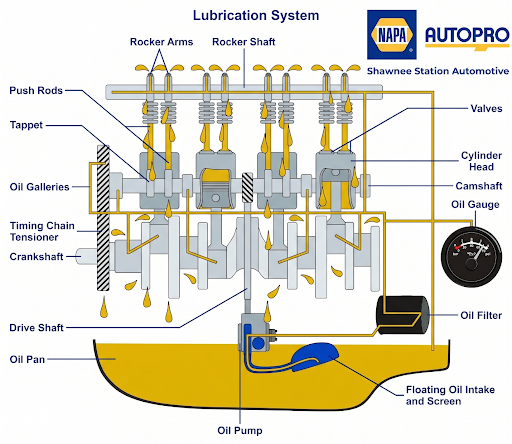
Engine oil serves as a secondary cooling medium by circulating through the lower sections of the engine. As oil flows over the crankshaft, connecting rods, and the undersides of the pistons, it absorbs thermal energy generated by friction and combustion. This heat is then carried back to the oil pan, where it is dissipated into the atmosphere, or through an oil cooler in high-performance or heavy-duty applications.
The technical effectiveness of heat dissipation depends on the viscosity and the additive package of the lubricant. If the oil is degraded, its ability to transfer heat diminishes. This results in:
- Increased thermal stress on piston rings and cylinder walls.
- Accelerated oxidation of the remaining oil.
- Potential warping of metal components due to localized "hot spots."
Maintaining fresh oil ensures that the fluid retains the specific heat capacity required to keep internal temperatures within the operational range specified by the manufacturer.
Turbocharged Engines and the Prevention of Carbonized Sludge
A turbocharged engine utilizes an exhaust-driven turbine to compress intake air, which increases power output and efficiency. Because these turbines are driven by hot exhaust gases, they operate at extreme temperatures and can rotate at speeds exceeding 200,000 revolutions per minute. The bearings within a turbocharger rely entirely on a thin film of engine oil for both lubrication and cooling.
Sludge is a gel-like substance that forms when engine oil oxidizes and breaks down due to prolonged exposure to high heat, oxygen, and combustion byproducts. In modern turbocharged engines, the risk of sludge formation is significantly higher. If the oil is not changed regularly, it can "coke" or carbonize within the narrow oil feed lines of the turbocharger.
The consequences of sludge accumulation in a turbocharged system include:
- Restricted oil flow to the turbocharger bearings, leading to immediate mechanical failure.
- Clogging of the Positive Crankcase Ventilation (PCV) system.
- Reduced oil pressure throughout the engine block.
- Increased emissions due to inefficient combustion.
Regular oil changes at a professional facility like Shawnee Station Automotive NAPA Autopro remove the contaminants and depleted additives that lead to sludge. This is especially critical for vehicles used in "severe" conditions, such as frequent short trips, idling, or towing, where the engine does not reach or maintain an ideal operating temperature for long periods.
The Technical Significance of a Multi-Point Vehicle Inspection
A multi-point vehicle inspection is a comprehensive systematic evaluation of a vehicle's major systems and components to ensure they meet safety and operational standards. At Shawnee Station Automotive NAPA Autopro, an oil service is not merely a fluid exchange; it is an opportunity for a professional technician to perform a visual and physical assessment of the vehicle's health.
When a vehicle is on a hoist for an oil change, technicians gain access to the undercarriage and engine bay, allowing them to identify issues that are not apparent to the driver. The value of this "eyes-on-car" time includes the following assessments:
Fluid Level and Condition Analysis
Technicians examine all vital fluids beyond engine oil, including:
- Transmission Fluid: Checking for discoloration or a burnt odor that indicates internal wear.
- Brake Fluid: Testing for moisture content, which can lower the boiling point and lead to brake fade.
- Coolant/Antifreeze: Verifying the pH level and freeze-point protection to prevent radiator corrosion.
- Power Steering Fluid: Identifying leaks in the rack and pinion or pump systems.
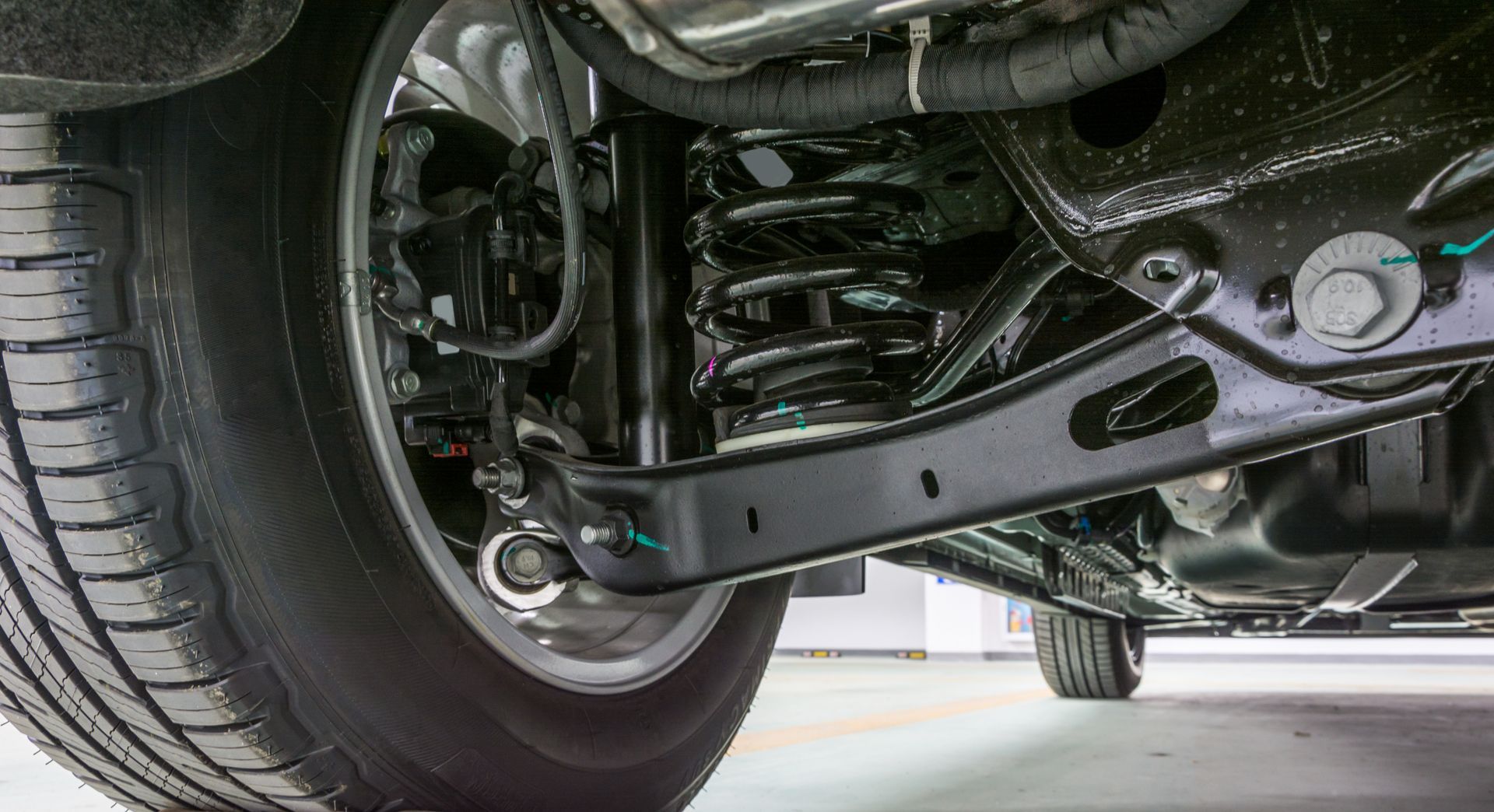
Suspension and Steering Component Review
The inspection covers the mechanical links that control vehicle handling and safety. This includes checking:
- Tie Rod Ends and Ball Joints: Searching for excessive "play" or torn boots that could lead to steering failure.
- Shock Absorbers and Struts: Looking for hydraulic leaks or structural damage.
- CV Boots and Axles: Ensuring the protective rubber boots are intact to prevent grease loss and joint contamination.
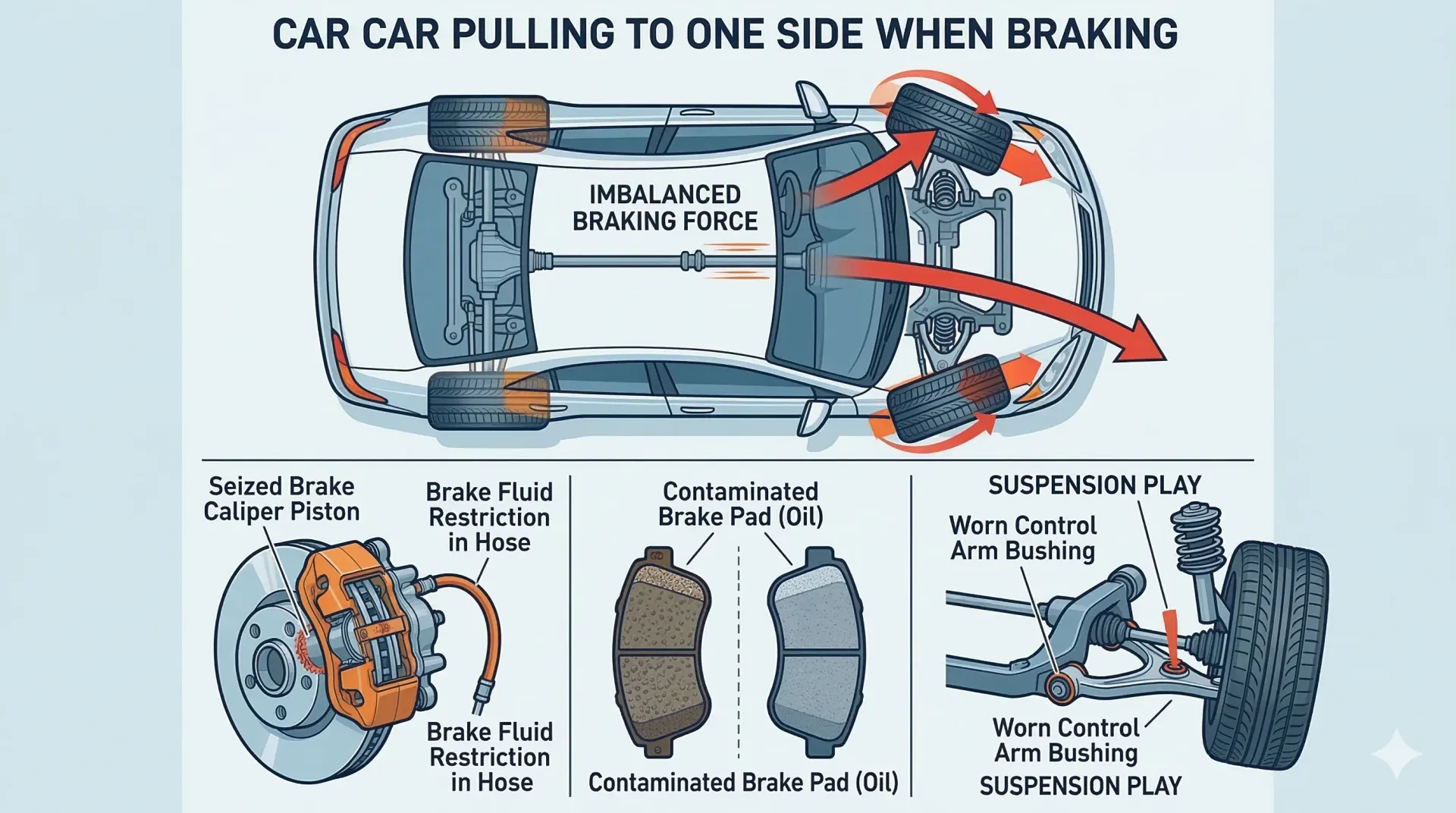
Braking System Evaluation
While the wheels may remain on the vehicle during a standard oil service, technicians often perform a visual check of the brake pads, rotors, and lines. Identifying a brake pad that is nearing its wear limit (e.g., 3mm or less) prevents damage to the more expensive rotors and ensures consistent stopping distances.
Determining Optimal Service Intervals: 5,000 to 8,000 Kilometers
Service intervals are the manufacturer-recommended distances or time periods between scheduled maintenance tasks. While modern synthetic oils are marketed for longer durations, the industry standard for maintaining peak mechanical integrity remains between 5,000 and 8,000 kilometers.
The 5,000 to 8,000-kilometer window is engineered to account for "real-world" driving variables. Most drivers operate under what manufacturers define as "severe conditions," which include:
- Frequent cold starts and short trips where the engine does not reach full temperature.
- Driving in dusty or high-pollen environments.
- Stop-and-go city traffic.
- Operation in extreme cold or extreme heat.
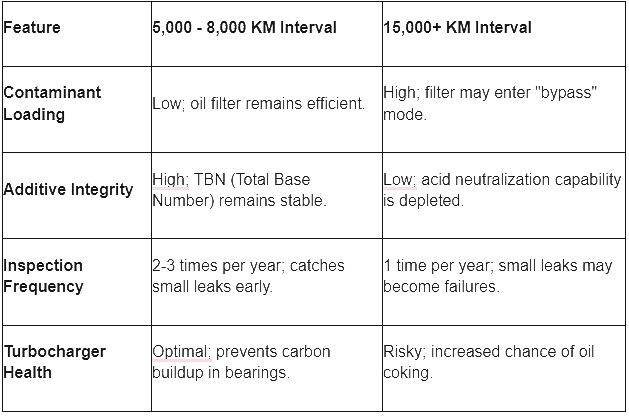
The following table outlines why the 5,000-8,000 km interval is technically superior to extended 15,000+ km intervals:
The Impact of Lubrication on Mechanical Efficiency and Emissions
Mechanical efficiency refers to the ratio of the power delivered by the engine to the power generated by combustion. A significant portion of energy is lost to internal friction. Fresh engine oil with the correct viscosity (such as 0W-20 or 5W-30) reduces this friction, allowing the engine to turn more easily.
If the oil is old, its viscosity changes. It may become too thick due to soot loading or too thin due to fuel dilution. This creates drag on the moving parts, which forces the engine to work harder and consume more fuel. Furthermore, degraded oil contributes to:
- Increased Blow-by: When oil cannot seal the gap between the piston rings and cylinder walls, combustion gases escape into the crankcase.
- Catalytic Converter Stress: Oil that bypasses the rings and burns in the combustion chamber can "poison" the catalytic converter, leading to expensive exhaust repairs and failed emissions tests.
Identifying Early Failure Markers Through Professional Diagnostics
Professional diagnostics involve the use of specialized tools and technician expertise to identify sub-clinical symptoms of vehicle failure. During a service at Shawnee Station Automotive NAPA Autopro, technicians look for specific "markers" that suggest a component is nearing the end of its service life.
- Drive Belt Condition: Technicians look for "glazing," cracking, or fraying on serpentine belts. A belt failure will immediately result in the loss of the alternator, water pump, and power steering.
- Battery Health: Testing the Cold Cranking Amps (CCA) during the inspection ensures the battery can handle temperature fluctuations.
- Tire Wear Patterns: Uneven wear can indicate a need for a wheel alignment or indicate that suspension bushings have failed.
By identifying these issues during a routine oil service, vehicle owners can plan for repairs rather than reacting to an emergency breakdown on the side of the road.
Frequently Asked Questions
- Is synthetic oil necessary if the owner's manual allows for conventional oil?
Synthetic oil provides superior thermal stability and flow characteristics at extreme temperatures. While conventional oil may meet the minimum requirements for older vehicles, synthetic oil is highly recommended for modern engines - particularly those with turbochargers - because it resists sludge formation and oxidation more effectively over the 5,000 to 8,000-kilometer interval. - Why does the oil filter need to be replaced with every oil change?
The oil filter is designed to capture microscopic contaminants, including metal shavings and carbon deposits. Once the filter media becomes saturated, a bypass valve opens to ensure the engine still receives oil. However, this bypassed oil is unfiltered. Replacing the filter ensures the lubricant remains free of abrasive particles. - Can I rely on the vehicle's Oil Life Monitor (OLM) system?
Most OLM systems use an algorithm based on engine revolutions, temperature, and driving time. While these systems are useful, they do not physically "see" the condition of the oil or the vehicle. Following a strict kilometer-based interval ensures the vehicle receives the essential multi-point inspection that an electronic sensor cannot provide. - What is the difference between an oil change and a vehicle inspection?
An oil change is a specific fluid maintenance task. A vehicle inspection is a diagnostic procedure where a technician evaluates the mechanical and safety systems of the entire vehicle. At Shawnee Station Automotive NAPA Autopro, these two services are integrated to provide a comprehensive preventative maintenance solution. - Does a professional oil service affect the manufacturer's warranty?
Yes, maintaining a record of professional oil services is essential for warranty compliance. Using a certified facility like Shawnee Station Automotive NAPA Autopro ensures that the service meets or exceeds manufacturer specifications, which protects the owner in the event of a powertrain warranty claim.