Is Your Car’s Suspension Ready for Rough, Icy Roads in Alberta?

September 26, 2025

Winter roads in Alberta are unforgiving. Between hidden potholes, uneven snowpack, and black ice, your suspension system gets tested with every drive. While most drivers focus on winter tires and batteries, suspension often goes unnoticed until it starts causing serious problems.


If your car hasn’t had a suspension check lately, this is the time to get it done. A worn or weakened suspension can impact how your vehicle handles, brakes, and rides, especially in snowy or icy conditions.


Why Suspension Becomes More Important in Winter


The suspension system does more than provide a smooth ride. It helps your tires stay in firm contact with the road, which directly affects steering control and braking performance. In dry conditions, a minor issue might not stand out. But once roads become slippery or uneven, those small problems can quickly become dangerous.


Worn shocks or loose suspension parts can cause extra bounce, delayed braking, and poor traction. That combination makes driving on snow-covered streets riskier than it needs to be.


Warning Signs Your Suspension May Be Worn


Many suspension issues develop gradually, so it’s easy to miss the early signs. Watch for these symptoms that often signal a problem:


  • The car bounces more than usual after hitting a bump
  • Uneven tire wear, especially on one side or in patchy spots
  • The vehicle leans or pulls while turning or switching lanes
  • Clunking or knocking noises over rough roads or potholes
  • The front of the car dips noticeably when braking


Any of these signs may indicate that suspension components are worn or failing. With winter approaching, it’s better to address these issues now before the roads get worse.


What Cold Weather Does to Suspension Components


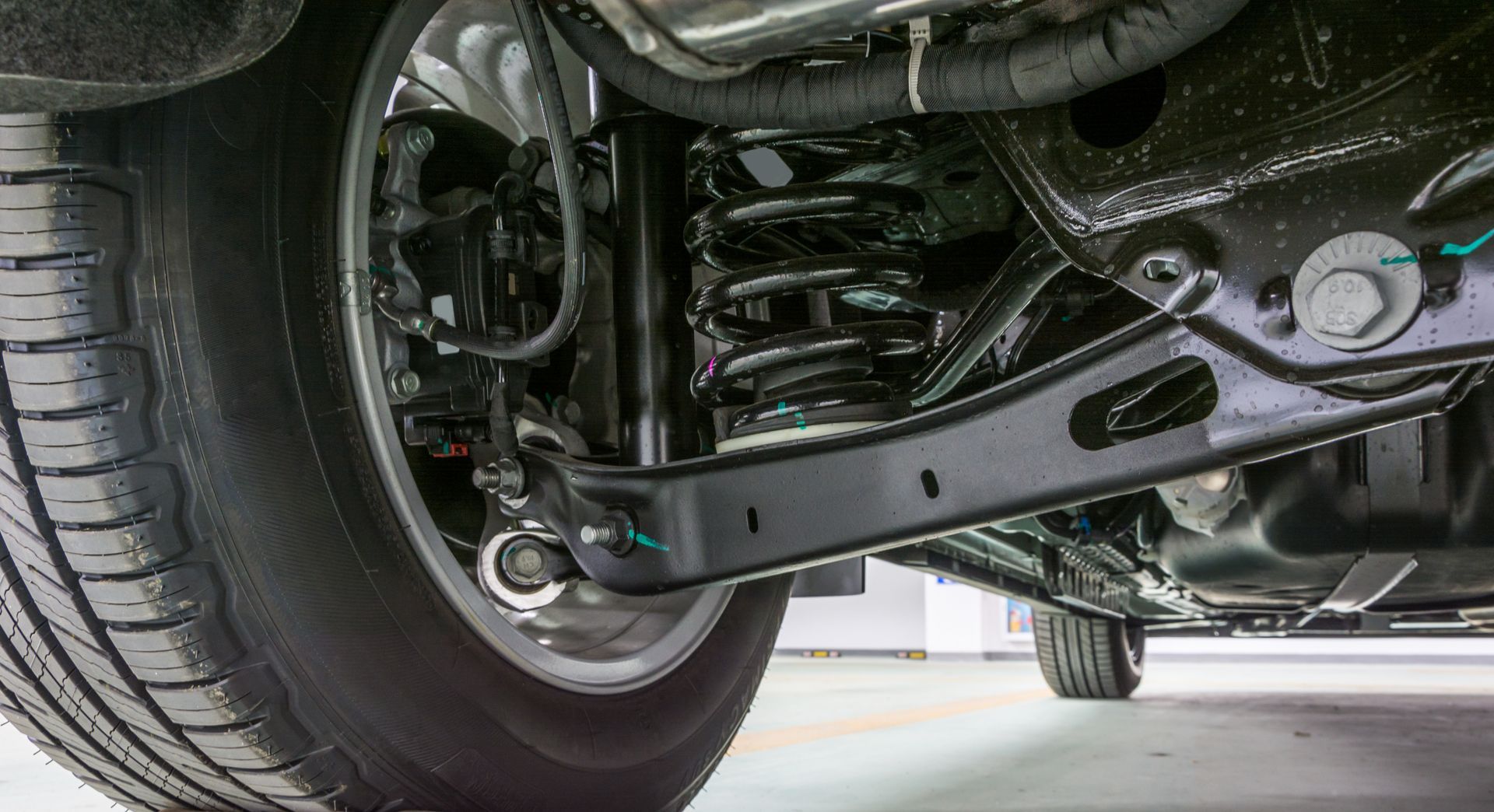
Alberta winters bring extreme cold, which affects how materials perform. Rubber bushings and seals can shrink or crack in freezing temperatures. These small parts cushion your suspension and help maintain stability, so any damage to them creates extra noise and play in the system.


Metal parts can also be affected. Control arms, ball joints, and tie rods may become brittle or lose lubrication in the cold, which reduces flexibility and increases wear. Shocks and struts may perform differently in low temperatures, especially if internal fluid starts to thicken.


Alignment and Tire Contact Matter Too


Your suspension system works closely with your wheels and tires. If your wheels are misaligned, your tires may not make even contact with the road. That reduces traction and increases the chances of sliding, especially on ice.


If your car drifts to one side or you’ve recently hit a curb or deep pothole, it’s worth getting your alignment checked. Poor alignment also leads to faster tire wear, which makes winter driving more difficult and more expensive.


Why a Pre-Winter Suspension Inspection Is a Smart Move


Having your suspension inspected before winter arrives gives you time to fix small issues before they turn into major problems. Most winter inspections include the following:


  • A check of shocks and struts for leaks or signs of wear
  • Inspection of ball joints, bushings, and control arms
  • A look at tie rods and steering components
  • Tire wear review and alignment check
  • Examination of mounts for corrosion or damage


Identifying and repairing suspension issues now will help your car handle better when road conditions are at their worst.


Stay Ahead of Alberta’s Winter Roads


In Calgary and nearby areas, roads can change from dry to icy in just a few hours. A suspension system in good shape helps your tires maintain contact with the road, improves stability, and reduces the stress of winter driving.


Don't wait until you lose control during a snowstorm or hear a loud clunk while driving to realize your suspension needs help. A quick inspection now brings peace of mind later.


Winter Suspension Checks at Shawnee Station Automotive in Calgary, AB


Shawnee Station Automotive in Calgary offers full suspension inspections and repairs to keep you safe during Alberta’s harshest season. Our experienced team checks every part of your suspension system and will recommend the right service to prepare your vehicle for winter roads.


Call or stop by today to schedule your inspection. Let us help you stay in control all season long.
April 3, 2026
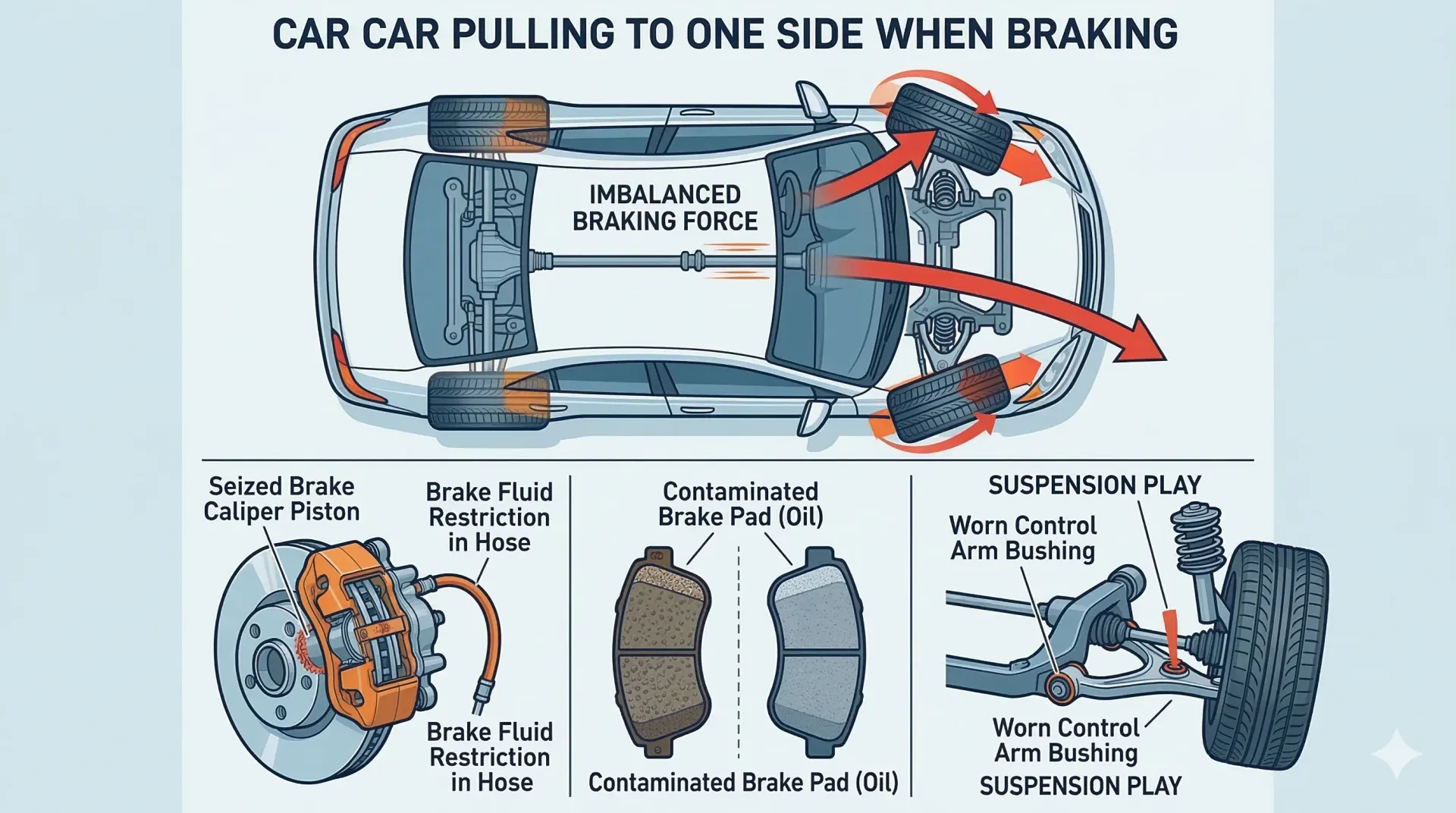
When a vehicle is functioning correctly, it should maintain a straight path during deceleration. If the steering wheel tugs to one side or the vehicle drifts toward the shoulder when you press the brake pedal, it is a clear indication of an imbalance in the braking or suspension system. This phenomenon is not merely an annoyance; it is a sign that one side of the vehicle is providing more stopping force than the other, or that the mechanical geometry of the car is compromised. The Primary Culprits of Brake Pulling Understanding why this occurs requires a look at how hydraulic and mechanical forces work together to stop a vehicle weighing several thousand pounds. 1. A Seized or "Stuck" Brake Caliper The brake caliper is the component that houses the brake pads and uses hydraulic pressure to squeeze them against the rotor. Inside the caliper is a piston. Over time, road grime, rust, or heat can cause this piston to seize. If the left caliper is seized: It may not apply pressure at all, causing the right side to do all the work. Consequently, the car pulls to the right. If the caliper is stuck "on": It might stay partially applied even when you are not braking, leading to extreme heat and a pull toward that side during operation. 2. A Collapsed Internal Brake Hose While the exterior of a brake hose might look fine, the internal lining can collapse. This creates a "one-way valve" effect. Brake fluid is forced into the caliper under high pressure when you step on the pedal, but it cannot return easily. This causes the brake on that side to stay applied longer than the other, resulting in a distinct pull. 3. Contaminated Brake Pads Brake pads require a specific coefficient of friction to work. If oil, grease, or leaking brake fluid gets onto the surface of the pads on one side of the car, those pads will lose their "bite." When you brake, the "clean" side will grab effectively while the "contaminated" side slides, pulling the car toward the side that is still working correctly. Comparing Causes of Pulling: At a Glance The following table outlines the most common reasons for a vehicle pulling during braking and how a technician identifies the root cause.
What Can A Computer Diagnostic Find About My Car? | Shawnee Station Automotive
March 27, 2026
Shawnee Station Automotive in Calgary, AB, explains what a computer diagnostic can reveal about your car beyond warning lights.
5 Most Common Reasons Your Car Fails An Emissions Test | Shawnee Station Automotive
February 27, 2026
Shawnee Station Automotive in Calgary, AB, explains five common reasons cars fail emissions tests and how to prepare for a retest.
What Does Low Coolant in the Reservoir Usually Mean? | Shawnee Station Automotive
January 30, 2026
Shawnee Station Automotive in Calgary, AB, explains what low coolant in the reservoir usually means and which cooling system leaks are most common.
Top Reasons Why You Should Use Your Vehicle's Owner's Manual | Shawnee Station Automotive
December 19, 2025
Shawnee Station Automotive in Calgary, AB, explains why using your vehicle’s owner’s manual can prevent mistakes and improve day-to-day car care.
How Does Uneven Tire Wear Hint at a Hidden Wheel Alignment Problem | Shawnee Station Automotive
November 28, 2025
Shawnee Station Automotive in Calgary, AB, discusses how uneven tire wear can point to hidden alignment issues you might not see at first glance.
5 Reasons to Use a Block Heater in the Cold Alberta Weather | Shawnee Station Automotive
October 31, 2025
Shawnee Station Automotive in Calgary, AB, shares five practical benefits of using a block heater to protect your engine in freezing weather.
Top 5 Back-to-School Car Maintenance Tips | Shawnee Station Automotive
August 29, 2025
Shawnee Station Automotive in Calgary, AB, shares top back-to-school car maintenance tips to keep your vehicle safe and reliable.
What Happens When Your Vehicle’s Sensors Misfire? | Shawnee Station Automotive
July 25, 2025
Shawnee Station Automotive in Calgary, AB, explains how sensor issues can affect your car’s performance and safety systems.
How to Tell If Your Car Has Electrical Problems | Shawnee Station Automotive
June 27, 2025
Shawnee Station Automotive in Calgary, AB, shares key symptoms of electrical issues and how to avoid bigger breakdowns.