When a vehicle is functioning correctly, it should maintain a straight path during deceleration. If the steering wheel tugs to one side or the vehicle drifts toward the shoulder when you press the brake pedal, it is a clear indication of an imbalance in the braking or suspension system. This phenomenon is not merely an annoyance; it is a sign that one side of the vehicle is providing more stopping force than the other, or that the mechanical geometry of the car is compromised.
The Primary Culprits of Brake Pulling
Understanding why this occurs requires a look at how hydraulic and mechanical forces work together to stop a vehicle weighing several thousand pounds.
1. A Seized or "Stuck" Brake Caliper
The brake caliper is the component that houses the brake pads and uses hydraulic pressure to squeeze them against the rotor. Inside the caliper is a piston. Over time, road grime, rust, or heat can cause this piston to seize.
- If the left caliper is seized: It may not apply pressure at all, causing the right side to do all the work. Consequently, the car pulls to the right.
- If the caliper is stuck "on": It might stay partially applied even when you are not braking, leading to extreme heat and a pull toward that side during operation.
2. A Collapsed Internal Brake Hose
While the exterior of a brake hose might look fine, the internal lining can collapse. This creates a "one-way valve" effect. Brake fluid is forced into the caliper under high pressure when you step on the pedal, but it cannot return easily. This causes the brake on that side to stay applied longer than the other, resulting in a distinct pull.
3. Contaminated Brake Pads
Brake pads require a specific coefficient of friction to work. If oil, grease, or leaking brake fluid gets onto the surface of the pads on one side of the car, those pads will lose their "bite." When you brake, the "clean" side will grab effectively while the "contaminated" side slides, pulling the car toward the side that is still working correctly.
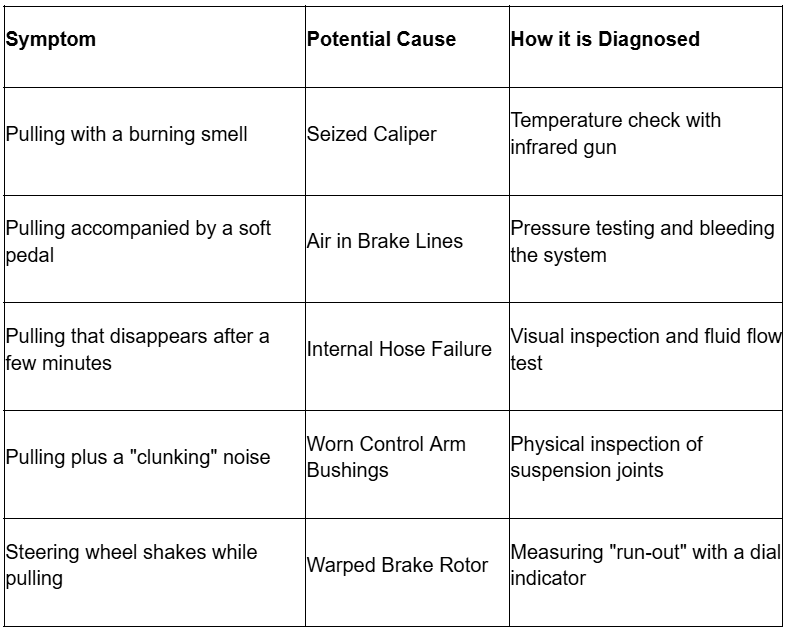
Comparing Causes of Pulling: At a Glance
The following table outlines the most common reasons for a vehicle pulling during braking and how a technician identifies the root cause.
5 Signs Your Braking Issue is Urgent
If you experience any of the following alongside a pulling sensation, you should schedule a diagnostic appointment immediately:
- The "Spongy" Pedal: If the brake pedal feels soft or sinks to the floor, you likely have a hydraulic leak or air in the system.
- Visible Fluid Leaks: Puddles of clear or amber fluid near the inside of your wheels indicate a breach in the braking system.
- Smoke or High Heat: If one wheel is emitting a "burning hair" smell or visible smoke, a caliper is likely locked in the "on" position.
- The Brake Warning Light: Any time the dashboard illuminates the brake symbol, the vehicle computer has detected a pressure loss or electronic fault.
- Metallic Screeching: This indicates the pads have worn down to the wear indicators, which can eventually lead to caliper damage.
The Role of Suspension and Alignment
It is a common misconception that pulling during braking is always a "brake problem." In many cases, the brakes are performing exactly as they should, but the components holding the wheel in place are failing.
Worn Control Arm Bushings
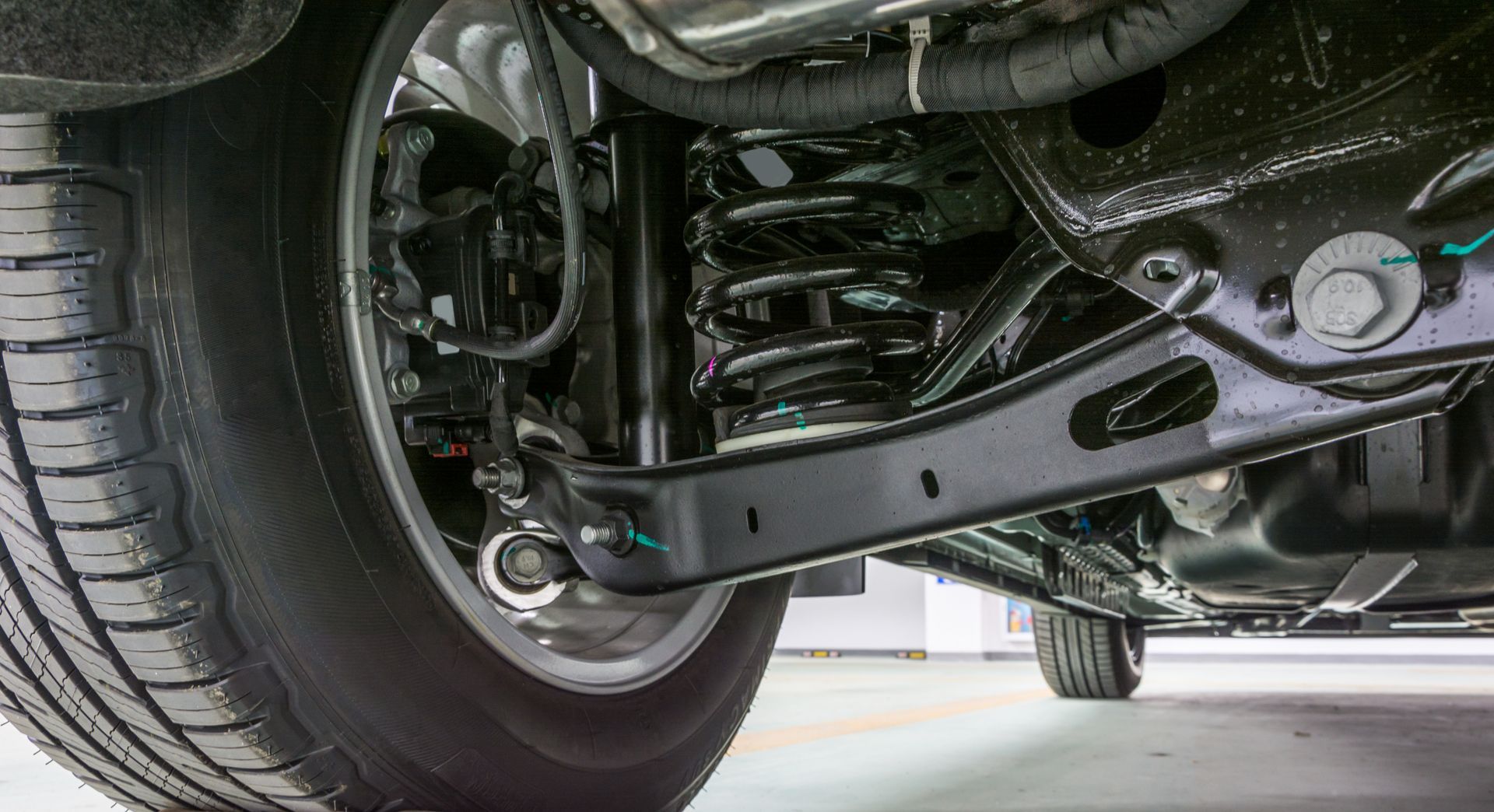
Control arms connect the wheel assembly to the frame of the car. They use rubber bushings to dampen vibration. When you brake, the forward momentum of the car puts immense pressure on these bushings. If the bushing on the left side is torn, the wheel will actually shift backward slightly under the force of braking. This changes the alignment of the car only while the brakes are applied, causing it to dart to one side.
Wheel Alignment Settings
While a bad alignment usually causes a car to pull even when you are not braking, certain settings - specifically "Caster" - can cause a pull that is magnified during braking. If your car has hit a Calgary pothole recently, the physical geometry of the suspension may be knocked out of specification.
Step-by-Step Diagnostic Process
When you bring a vehicle to Shawnee Station Automotive for this issue, the technicians follow a systematic approach to ensure an accurate repair:
- Test Drive: The technician confirms the direction of the pull and notes if it is accompanied by steering wheel vibration.
- Brake Force Inspection: The vehicle is lifted to check if all wheels spin freely when the brakes are released and lock firmly when applied.
- Temperature Analysis: Using an infrared thermometer, the technician compares the heat of the rotors. A significantly hotter rotor indicates a dragging brake; a cooler rotor indicates a brake that is not engaging.
- Suspension Stress Test: The control arms and ball joints are pried gently to check for excessive "play" or movement.
- Fluid Condition Check: The brake fluid is inspected for moisture content or copper contamination, which can cause internal component failure.
Conclusion
A vehicle that pulls to the left or right during braking is communicating a specific mechanical failure. Whether it is a hydraulic restriction in a hose, a mechanical seizure in a caliper, or a structural failure in a suspension bushing, the issue will not resolve itself. Regular maintenance and professional inspections are the most effective ways to ensure your vehicle stops straight and safe every time.
Would you like me to create a social media summary or a series of meta-descriptions for this article to help with its online visibility?
Frequently Asked Questions (FAQ)
Can I drive my car if it pulls when I brake?
It is not recommended. A car that pulls to one side is unpredictable in emergency stopping situations. If you have to brake hard on an icy road, the imbalance could cause the vehicle to spin or slide into another lane.
Does a wheel alignment fix brake pulling?
Only if the alignment was the cause. If the pull only happens when your foot is on the brake pedal, the issue is almost always related to the braking hardware or worn suspension bushings, not the alignment settings themselves.
How much does it cost to fix a pulling brake?
The cost varies depending on the cause. A simple brake fluid flush or slide pin lubrication is relatively inexpensive. However, replacing a seized caliper or a set of control arms is a more involved repair. A professional diagnostic is the only way to get an accurate estimate.
Why does my car pull more in the winter?
Calgary winters involve a lot of road salt and moisture. This creates an environment where rust can form quickly on the moving parts of the brake caliper, making them much more likely to seize.