Persistent grinding when you brake is a reason to stop using the car and arrange an inspection. If the noise is harsh or comes with weaker braking, pull over safely and get help. Continuing the trip risks damaging more brake parts and losing the stopping power you need at the next intersection.
Worn pads are a familiar cause, but a sticking caliper, damaged rotor, or trapped debris also needs checking. The timing of the sound helps the technician narrow it down. Grinding only with pedal pressure, scraping while coasting, and a noise that changes during turns give different clues.
Grinding From Worn Brake Pads
Brake pads contain friction material that presses against the rotor to slow the wheel. As that material wears away, the pad backing can eventually contact the rotor. Metal rubbing against metal creates a rough noise and rapidly damages the rotor surface.
Once the pad backing reaches the rotor, inspect the rotor for scoring and remaining thickness. The caliper and hardware also need checking to explain how the pads wore. New pads alone leave damaged surfaces or a dragging caliper ready to shorten the next set's life.
The pedal may still feel fairly normal early on. Treat the noise itself as a reason to stop using the vehicle until the brakes have been assessed. Waiting for a dramatic change in pedal feel allows damage to keep building.
Sticking Brake Calipers and Uneven Pad Wear
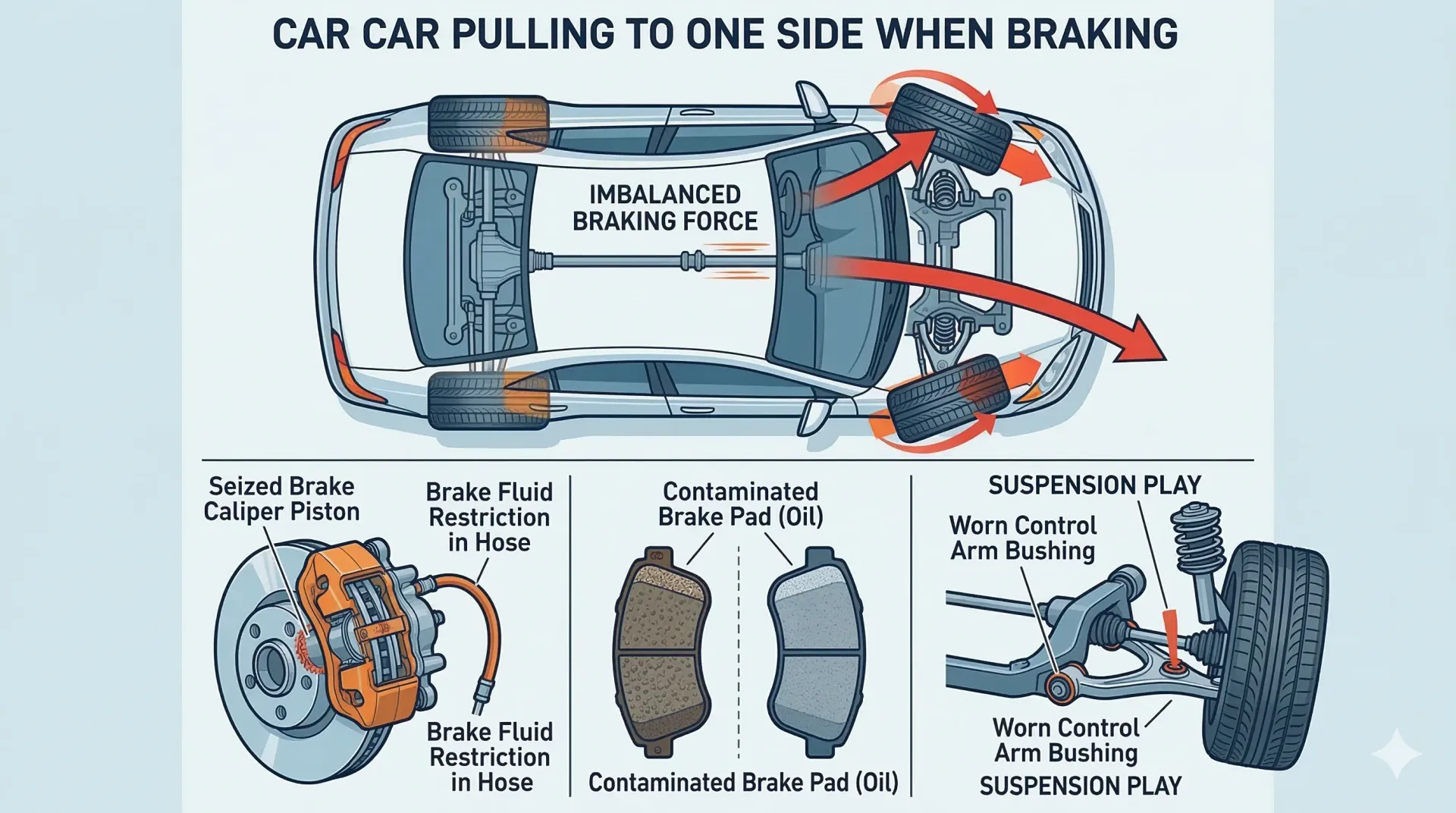
A caliper presses the pads against the rotor and releases them as braking demand ends. A sticking piston, seized slide, or related hydraulic problem prevents normal movement. One pad may stay in contact and wear much faster than the others.
You might notice a hot smell, a pull while braking, or one wheel area giving off unusually strong heat. Avoid touching a wheel or brake component that seems hot. The temperature can be high enough to injure you.
The repair needs to restore proper release and movement. That may involve caliper work, slide hardware, or a hose check, followed by replacing parts damaged by the dragging brake. The inspection should explain the cause of the uneven wear instead of treating it as ordinary pad use.
Brake Rotor Rust Versus Persistent Grinding
Exposed iron rotors develop a light surface rust layer after moisture exposure. Drivers sometimes hear a brief light scrape during the first ordinary stop after the vehicle has been parked. Calgary weather and periods of storage make that observation familiar.
Persistent harsh grinding belongs in a more urgent category. A sound that continues through normal braking, grows louder, or comes with vibration needs inspection. A thick corrosion layer, heavily pitted surface, or damaged rotor isn't the same condition as a thin overnight film.
Describe whether the noise faded after the first ordinary stop or stayed through the drive. A brief light scrape after wet parking gives the technician a different history from loud grinding at every intersection. The surface inspection then shows whether the rotor needs repair or replacement.
Brake Shields and Hardware That Scrape
A stone near the rotor or a bent shield touching it can make a scraping noise even with your foot off the pedal. Loose brake hardware creates other sounds. Mention whether turning or light brake pressure changes the noise, then leave wheel removal and underside checks to the shop.
The inspection should cover the friction surfaces, shields, hardware, caliper movement, and nearby wheel components. That wider check is especially useful when the pads still have material left, and their condition doesn't explain the sound.
Grinding Brake Symptoms That Require Assistance
Stop safely and arrange assistance if grinding comes with:
- A soft brake pedal or one that sinks unusually low
- A noticeable loss of stopping power
- A strong pull or unstable feeling during braking
- Smoke or a burning smell near a wheel
- Substantial heat from a wheel area
- A brake-system warning
- Visible brake fluid leakage
There isn't a reliable number of safe remaining miles for a grinding brake. Damage, braking balance, and hydraulic condition determine the risk, and they need inspection. A short trip still includes intersections and unexpected stops.
If you're unsure whether to drive to the shop, call first and describe the grinding and pedal feel. Mention any smoke, pulling, or brake warning. Arranging recovery is the safer choice when braking has weakened, and it prevents more wear during a trip the brakes may be unable to handle reliably.
What Brake Repair for Grinding Includes
The estimate should show the worn pads, rotor condition, and any caliper or hydraulic problem found. Photos and measurements help explain why the job goes beyond the noise itself. Ask what needs fixing now to restore safe braking and what maintenance items can wait.
Before approving the repair, confirm whether the estimate covers one axle or both and which damaged components it includes. Photos of the pads and rotor surfaces help explain why the job extends beyond the source of the noise.
After repair, the brakes need checking for proper operation and any remaining noise. Follow the instructions provided for the replacement parts, including any settling-in procedure the manufacturer requires. Avoid improvised hard-stop routines unless the shop has given a procedure appropriate for the vehicle and a safe setting.
Brake Repair at Shawnee Station Automotive
Shawnee Station Automotive in Calgary, AB, can discuss brake inspection and repair for persistent grinding. Describe the sound, pedal feel, and any pulling or heat when you call. If stopping performance has changed, we'll discuss arranging recovery instead of driving the car to the appointment.
Call
Shawnee Station Automotive to arrange brake service before another trip with persistent grinding.