Suspension bushings are small parts with a big job. They sit between metal suspension components and the vehicle body or subframe, allowing controlled movement while reducing vibration and keeping suspension geometry where it belongs.
Most bushings do not have a fixed replacement interval. They are generally replaced when they become cracked, torn, separated, excessively soft, or loose enough to affect steering, tire wear, or ride quality. Because deterioration happens gradually, worn bushings are often discovered during an inspection rather than after a sudden failure.
What Suspension Bushings Actually Do
Bushings are commonly made from rubber, synthetic materials, or combinations of rubber and metal. You can find them in control arms, sway bars, trailing arms, strut rods, and other suspension mounting points depending on the vehicle's design.
Their job is to allow a limited amount of movement without letting suspension parts shift freely. When you brake, accelerate, turn, or drive over uneven pavement, the suspension is constantly loading and unloading these bushings. A healthy bushing absorbs some movement while keeping the attached component positioned correctly.
Age Can Wear Bushings Even on Low-Mileage Cars
Mileage contributes to bushing wear, but time is important too. Rubber gradually hardens and develops cracks after years of exposure to heat, cold, road grime, water, and ozone. A low-mileage vehicle that has been on the road for many years can therefore have deteriorated bushings even if its suspension has not covered an unusually high number of miles.
Climate and driving conditions also influence lifespan. Rough roads, potholes, road salt, heavy vehicle loads, and repeated impacts can accelerate wear. Oil or other petroleum-based fluids leaking onto certain rubber bushings can soften and weaken the material as well.
Cracks Do Not Always Mean Immediate Replacement
Seeing a few surface cracks in an older rubber bushing does not automatically mean it needs to be replaced. Some bushings develop minor weather checking while still holding the suspension component securely.
The important question is whether the rubber has separated from its sleeve, torn deeply, collapsed, or developed enough movement to affect the suspension. Technicians often use a light and suitable tools to check how much the component moves under load rather than deciding on surface appearance alone.
Clunking and Knocking Can Be Warning Signs
Worn bushings can allow suspension components to shift farther than intended. That extra movement may create a dull clunk when driving over bumps, entering a driveway, braking, or changing direction.
Common signs that deserve attention include:
- Clunking from the front or rear suspension
- Steering that feels loose or wanders
- Uneven or accelerated tire wear
- A change in handling during braking
- Squeaking over bumps
- Visible torn or separated rubber
These symptoms are not exclusive to bushings. Ball joints, tie rods, sway bar links, strut mounts, shocks, and other suspension components can create similar noises, so the source should be confirmed before parts are replaced.
Control Arm Bushings Can Affect Alignment
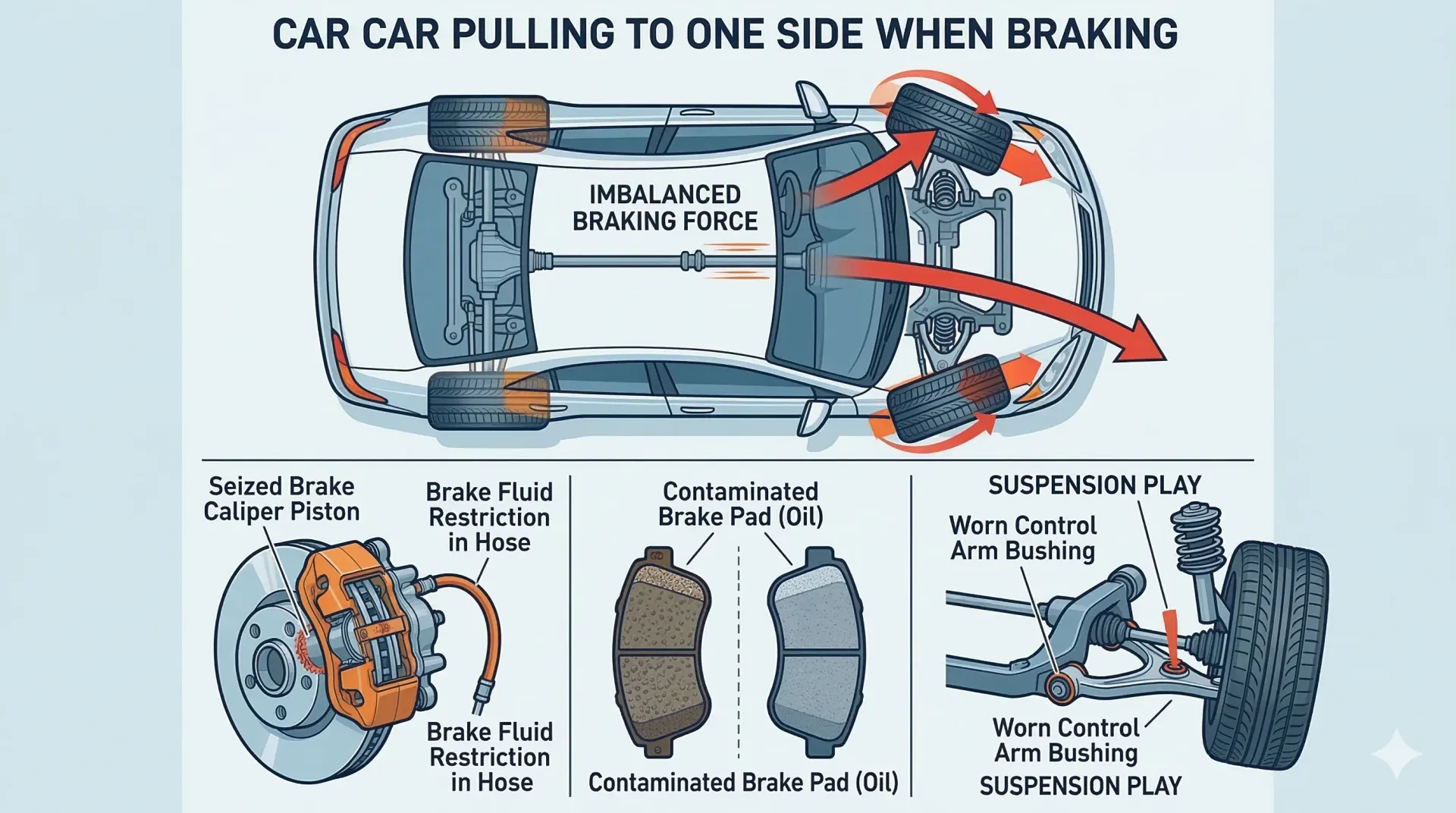
Control arm bushings help keep the wheel positioned correctly relative to the body. When those bushings become excessively worn, the control arm can shift as the vehicle accelerates, brakes, or travels over bumps.
That movement can change alignment angles while the vehicle is being driven, even if the readings looked acceptable while it was sitting on an alignment rack. Drivers may notice pulling, steering instability, or tire wear that returns after an alignment. If worn bushings are allowing excessive movement, they should be repaired before trying to correct the alignment.
Sway Bar Bushings Wear Differently
Sway bar bushings support the stabilizer bar while allowing it to twist as the suspension moves. When these bushings wear, they can create knocking or squeaking, particularly over uneven pavement or when one wheel travels over a bump before the other.
Sway bar bushing wear does not usually affect wheel alignment in the same way as a badly worn control arm bushing. It can still create unwanted noise and allow extra movement in the stabilizer bar, so replacement may be appropriate once significant wear or looseness is confirmed.
Some Bushings Are Replaced With the Complete Arm
Depending on the vehicle, a worn bushing may be available separately or only as part of a complete control arm or suspension link. Even when an individual bushing is available, replacing the whole arm can sometimes be more practical because pressing the old bushing out and installing a new one requires special equipment and additional labor.
A complete arm may also include a new ball joint or other attached components. The best repair depends on parts availability, the condition of the remaining components, labor involved, and the quality of the available replacement parts.
Replacing Bushings at the Right Time Is Important
Waiting until a bushing completely separates can allow a suspension component to move much farther than it's designed to. That can affect steering response, tire wear, braking stability, and nearby parts.
At the same time, replacing every slightly cracked bushing is unnecessary. A professional evaluation should focus on actual movement and structural condition. Regular maintenance gives technicians opportunities to watch aging bushings over time and recommend replacement when deterioration becomes significant rather than simply because the vehicle has reached a certain mileage.
Get Suspension Bushing Replacement in Calgary, AB, With Shawnee Station Automotive
Shawnee Station Automotive in Calgary, AB, can check control arm bushings, sway bar bushings, suspension links, and related steering and suspension components for wear or excessive movement.
If you hear clunks, notice uneven tire wear, or experience changes in steering or handling,
contact us to schedule service.